How Understanding pH Turned Me Into a More Confident Home Cook
I used to believe that pH was something I left behind in high school chemistry, but after years in the kitchen I now see it as one of the most practical tools a home cook can use. Every ingredient has a pH, and shifting that balance—whether by adding lemon juice, vinegar, baking soda, or even an alkaline bath—changes how food cooks, looks, and tastes. In 2026, I am more convinced than ever that learning to control pH is what separates a good cook from a truly great one.
Acids are the workhorses of flavor. They taste sour and they denature proteins. That means a splash of vinegar in poaching water helps egg whites firm up neatly, while citrus juice can "cook" raw fish in a ceviche without any heat. I keep this in mind every time I make a marinade. A yogurt- or citrus-based marinade can tenderize the surface of meat quickly, but if I leave it too long, the same acid turns the texture mushy. The lesson is simple: acid is powerful, but it needs a time limit.
Alkaline conditions, on the other hand, accelerate the Maillard reaction. That is the browning process that creates roasted, nutty, complex flavors. When I bake pretzels at home, I dip them in an alkaline bath before they go into the oven. The result is a deep, dark crust and a toasty flavor I could never get otherwise. I have also started adding a pinch of baking soda to the water when I boil potatoes for roasting. The alkaline water breaks down pectin on the surface of the potatoes, creating a starchy slurry that turns shatteringly crispy in the oven. For shrimp, I dry-brine them with baking soda and salt so they stay snappy and juicy. Blanching green vegetables with a little baking soda keeps them vibrantly green, though I am careful not to overdo it because too much can make them mushy.
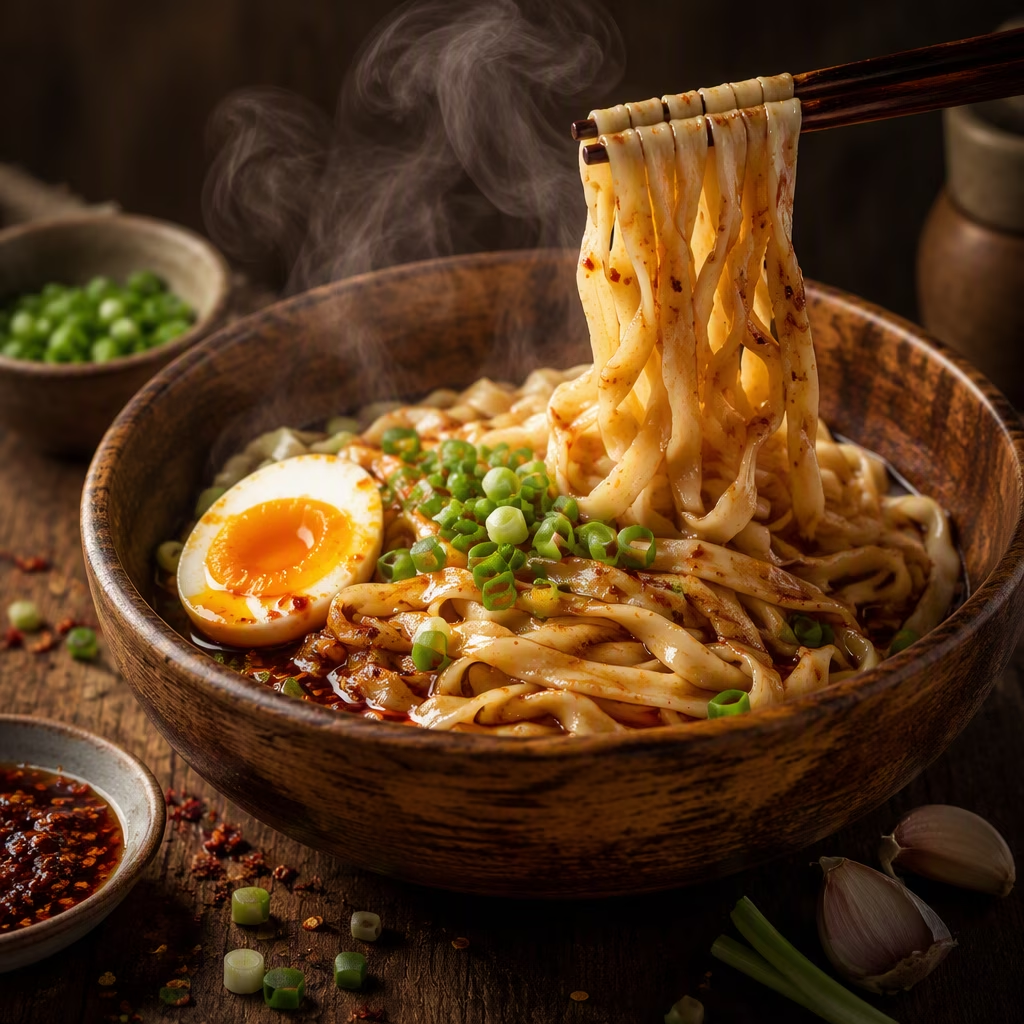
This alkaline power shows up in pantry staples too. Dutch-process cocoa is treated with an alkaline solution to reduce natural acidity, giving chocolate desserts a deeper, darker flavor. Nixtamalization—the process of cooking and soaking corn kernels with slaked lime—softens the kernels and improves the bioavailability of niacin. That is the same technique behind masa for tortillas. Foods like century eggs, ramen noodles, and hominy also rely on alkaline processing for their distinctive chew and depth.
The interplay between acids and bases is most obvious in baking. Mixing baking soda with buttermilk, vinegar, or yogurt creates carbon dioxide, which makes batters rise. But many cooks confuse baking soda with baking powder. I now think of them as two different tools:
-
🥄 Baking soda: pure sodium bicarbonate, alkaline, needs an external acid to activate, and boosts browning.
-
🥄 Baking powder: sodium bicarbonate plus a powdered acid and starch, so it only needs moisture and heat to work.
| Ingredient | Composition | Activation | Extra effect |
|---|---|---|---|
| Baking soda | Pure sodium bicarbonate | Needs acid from recipe | Accelerates browning, adds lift |
| Baking powder | Sodium bicarbonate + powdered acid + starch | Moisture and heat | Provides lift without added acid |
Acids are also my favorite tool for quick preservation. A quick pickle made with vinegar or lime juice infuses vegetables with bright, punchy flavor in minutes. If I have more patience, I use a salt brine to kick off fermentation, letting lactic acid develop over days or weeks. That highly acidic environment also inhibits harmful bacteria growth, which is why pickled foods last longer. I have started keeping a jar of quick-pickled onions in my refrigerator at all times; they add acidity and crunch to tacos, salads, and grain bowls.
What changed my cooking most is not a single recipe but a mental shift. When a dish tastes flat, I first ask whether it needs acid. When I want deeper browning, I ask whether a slightly alkaline environment can help. When a batter fails to rise, I check whether I used the right leavener. These small questions, repeated hundreds of times, have made my results more predictable and my meals more delicious. pH is no longer an abstract scale from zero to 14. It is a set of dials I can turn in my kitchen every single day.