The Art of Layering: Building a Complex Vegan Pasta with Triple Garlic
J. Kenji Lopez-Alt often reflects on the parallels between different types of layering. While his recent foray into running has introduced him to the complex world of technical fabrics and thermal layers, his true expertise lies in a different, more flavorful domain. Building a robust vegan pasta dish, he insists, isn't fundamentally different from crafting its non-vegan counterpart. The pasta remains the star, supported by a cast of humble supermarket staples—plum tomatoes, garlic, olives, and breadcrumbs. Yet, with careful attention to concentrating and layering their flavors, these simple ingredients are transformed into something remarkably complex and intense. It's a culinary process he understands far better than coordinating a runner's wardrobe, a fact his wife can readily attest to after gifting him an entire ensemble of sleek, moisture-wicking gear.
The Foundation: A Story of Two Layers
Kenji's journey into running began with a confession, inspired by a TV show about dark secrets. He started using a popular training app, but the initial weeks were a struggle, hampered by ancient sneakers whose hardened soles felt like cast iron skillets strapped to his feet. With new shoes, the shin splints vanished, and his wife intervened on the sartorial front, replacing his college-era yellow shorts and knee-high black socks with a proper, layered running kit. This experience highlighted a key principle: effective layering, whether for warmth or flavor, requires intention and understanding. While he deferred to his wife on clothing, in the kitchen, he is the master of layering textures and tastes.
The First Garlic Layer: Slow-Roasted and Sweet
The dish, true to its "triple garlic" name, begins with a deep exploration of Allium sativum. Kenji marvels at garlic's chameleonic nature—its flavor profile shifts dramatically based on how it's treated. The first layer harnesses the sweet, mellow depth of slow-cooked garlic. He achieves this by roasting tomatoes. While sun-dried tomatoes are a common choice, Kenji prefers the intense, concentrated sweetness of tomatoes slowly roasted in the oven until they are just half-dry. He splits cherry or plum tomatoes (consistently sweeter year-round), arranges them cut-side up on a foil-lined sheet, and scatters them with thin slices of garlic and fresh thyme. A drizzle of olive oil, a sprinkle of salt, and a slow roast in a low oven for about an hour and fifteen minutes does the trick. The result? Deeply flavorful, semi-dried tomatoes studded with tender, roasted garlic chips. The temptation to eat these chips straight from the tray is high, but discipline is key—some must be saved for the final assembly.
The Second Garlic Layer: Sautéed and Caramelized
Next comes the sweet, nutty, and caramelized garlic layer. The technique here is crucial. Kenji smashes whole garlic cloves with the side of a chef's knife. This isn't just for convenience; it ruptures the cell walls, releasing a flood of aromatic compounds and flavor precursors. These smashed cloves are then slow-cooked in a generous pool of olive oil over gentle heat. They are turned and sizzled patiently until they become completely tender and take on a rich, golden-brown color. This process yields two treasures: garlic cloves so soft they can be chopped into a near-paste, and a garlic-infused oil now deeply flavored and ready to coat every strand or tube of pasta.
Building the Sauce: Tomato Intensity and Acidity
The oven-dried tomatoes provide a wonderful base, but Kenji wants to ensure a hit of intense tomato flavor and bright acidity in every bite. To complete the sauce, he cooks down a couple of tablespoons of tomato paste in the fragrant garlic oil, along with a pinch of red pepper flakes and dried oregano. This step, known as "frying" the tomato paste, deepens its flavor and removes any raw, tinny taste. He then deglazes the pan with a splash of white wine, whisking it in to create the foundation of the sauce. At this stage, the sauce might look broken and somewhat greasy—a common sight when oil and tomato-based liquids haven't yet emulsified. But, as Kenji assures, this will be fixed beautifully later.
The Third Garlic Layer: Raw and Pungent
The final garlic element introduces a sharp, pungent kick. This comes not from a clove tossed directly into the pot, but from a transformative topping: garlicky breadcrumbs. Kenji champions the magic of homemade breadcrumbs, citing a renowned food writer's praise. Forget the bland, sandy store-bought kind. The right method starts with fresh bread, pulsed in a food processor until coarse, not fine. These crumbs are then sautéed in really good olive oil until golden and crisp. Just before they're done, a generous amount of minced raw garlic and chopped parsley are stirred in, cooking just enough to lose their raw edge but retain their vibrant, sharp character. These crumbs are so moreish that Kenji admits to having wrestled the bowl away from his wife to save enough for the pasta. They add an essential layer of crunch and a bold, fresh garlic flavor.
The Finishing Touches and The Magic of Pasta Water
With the triple garlic and dual tomato layers established, a few final touches bring balance and freshness:
-
Sliced Kalamata olives: For a briny, salty contrast.
-
Thinly sliced scallions: For a mild, oniony bite and green color.
Kenji recommends a thick, tubular, ridged pasta like rigatoni or penne rigate. The ridges and holes are perfect for capturing the flavorful, garlicky oil and sauce. Now, for the pivotal moment that fixes the "broken" sauce: pasta water. He drains the pasta about a minute before it's al dente, reserving at least half a cup of the starchy cooking water. The pasta, along with the roasted tomatoes (and their saved garlic chips), the olive oil from the roasted garlic pan, the tomato sauce, the olives, and the scallions, all go into a large pan or back into the pot. The reserved pasta water is added, and everything is brought to a hard simmer over high heat.
As you vigorously toss and stir, magic happens:
-
The pasta finishes cooking.
-
The mechanical action of tossing helps create an emulsion.
-
The starch from the pasta water acts as a binder, smoothing out the oil and liquid into a creamy, cohesive sauce that clings perfectly to every piece of pasta.
The Final Plate: A Symphony of Texture and Taste
The finished dish is a celebration of contrast and complexity. Each forkful offers a mix of:
-
Tender: The slow-cooked garlic and roasted tomatoes.
-
Chewy: The perfectly cooked al dente pasta.
-
Crunchy: The garlicky parsley breadcrumbs sprinkled on top.
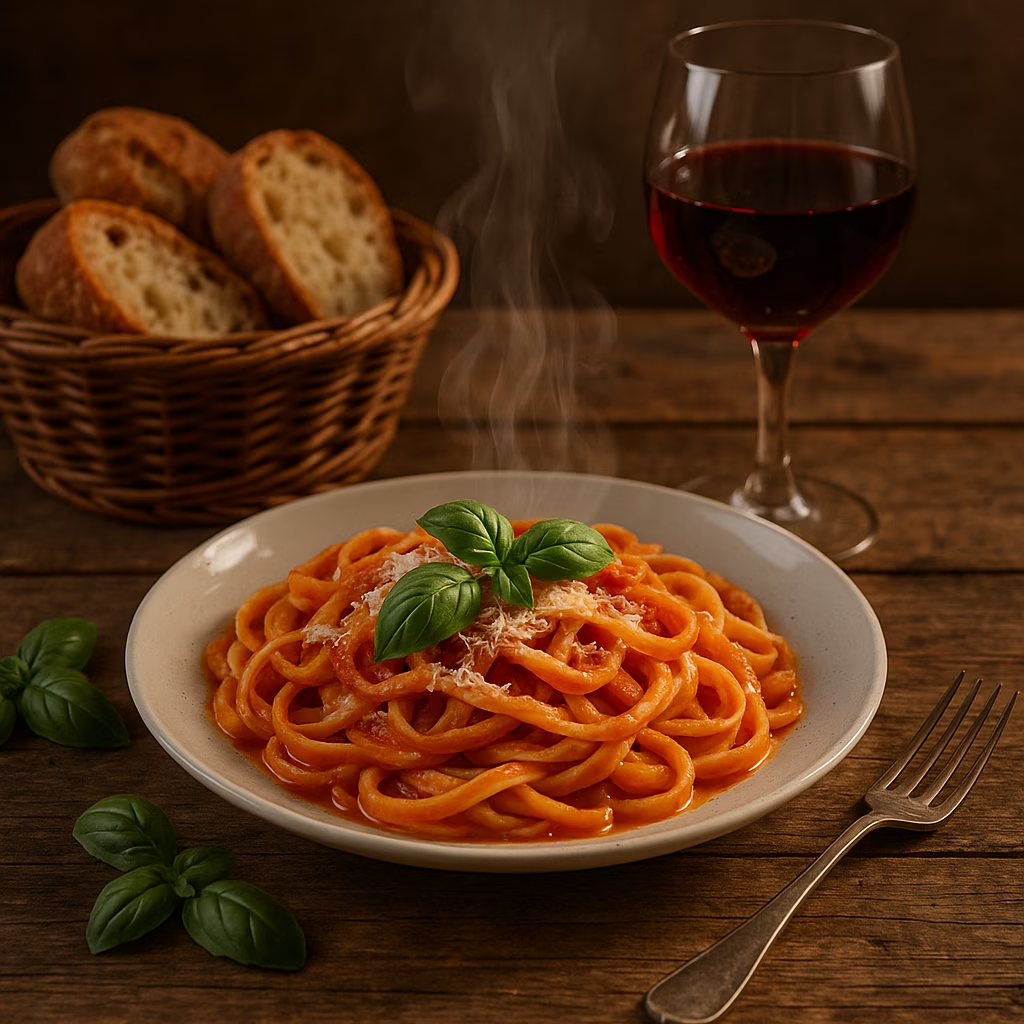
The flavors—sweet roasted garlic, rich tomato paste, sharp fresh garlic, briny olive, and herbal thyme—all come through distinctly yet harmoniously. It's a deeply satisfying, restaurant-quality meal built from simple parts. Kenji acknowledges the advantages of his new technical running layers—they are, after all, removable. But until a major retailer invents a pair of shorts as delicious as they are functional (cue the "eat my shorts" joke), he confidently claims victory in this round of layered mastery. The true warmth, it seems, comes from the bowl.