The Cold Water Pasta Revolution: Debunking Boiling Myths
For decades, the culinary commandment 'thou shalt boil water first' governed pasta cooking with near-religious fervor. Yet emerging techniques prove starting pasta in cold water isn’t just possible—it’s often superior. This paradigm shift, validated by food science, challenges kitchen orthodoxy while saving time and energy. The revelation stems from understanding pasta’s two-phase transformation: hydration and cooking. Traditionally intertwined, these phases can be separated with deliciously efficient results.
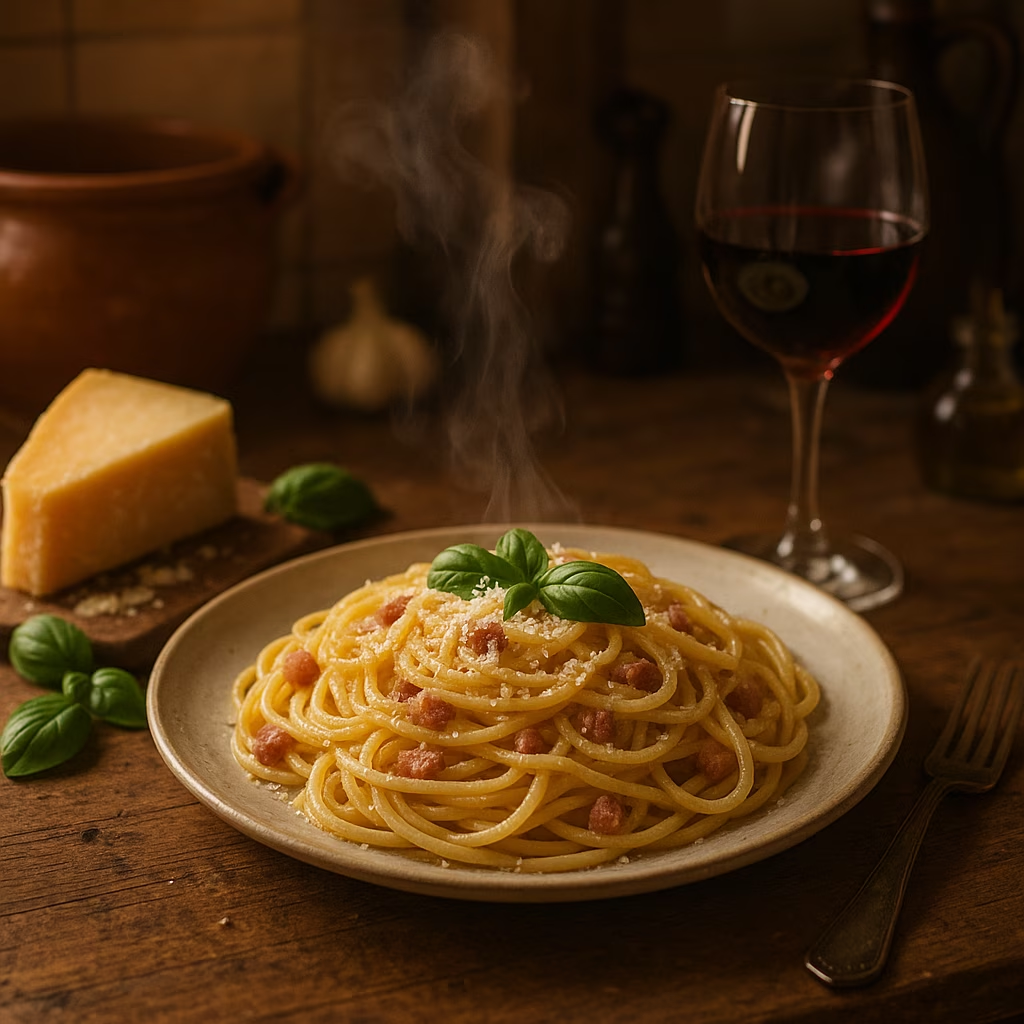
🔬 The Science of Hydration
Cooking pasta isn’t merely about heat application; it’s fundamentally a hydration process. Experiments reveal identical water absorption (≈75% of dry weight) whether started in cold or boiling water. Taste tests confirm no discernible difference in texture or flavor. This discovery upends the "rolling boil" dogma:
-
Phase 1: Starch granules absorb water at any temperature above 40°F (4°C)
-
Phase 2: Proteins denature and starches gelatinize above 180°F (82°C)
⚡️ The Energy-Efficient Method
Forget watching pots boil. The optimal technique combines speed and sustainability:
-
Place pasta in medium saucepan
-
Cover with cold water + 1" extra
-
Add salt (1 tbsp per quart)
-
Heat on high, stirring occasionally
-
At boil, cover and reduce to low
-
Cook 1-2 minutes less than box time
This method slashes energy use by 30% versus traditional boiling. As chef J. Kenji López-Alt notes: "Small-pot cooking serendipitously concentrates starch—your sauce’s best friend."
⚖️ The Great Pot Size Debate
Conventional wisdom claims large pots "return to boil faster" after adding pasta. Physics proves otherwise:
| Pot Size | Heat Loss | Net Energy Input | Boil Recovery |
|---|---|---|---|
| 1 Quart | 1,000 BTU | 9,000 BTU | ✅ Faster |
| 1 Gallon | 2,000 BTU | 8,000 BTU | ❌ Slower |
Why? Smaller pots need less energy per degree despite greater initial temperature drop. Larger pots lose more heat through surface area. Mind. Blown. 🤯
🕒 The 1-Minute Pasta Hack
Enter the game-changing pre-soak technique pioneered by Ideas In Food:
-
Soak dried pasta in cold water 30-90 mins (until pliable)
-
Drain and refrigerate hydrated pasta
-
Finish in simmering sauce for 60 seconds
This "pasta meal prep" delivers restaurant-quality results faster than Uber Eats. Pro tip: Hydrate spaghetti vertically in a pitcher for tangle-free storage!
🚫 The Exceptions (Yes, There Are Two!)
While cold-water rules for most dried pasta, two cases demand boiling starts:
-
Fresh Egg Pasta: Proteins require rapid heat setting to prevent disintegration
-
Long Skinny Shapes: Spaghetti/fettuccine need boiling water’s movement to avoid clumping
For these, use traditional methods or pre-soak in cold water before finishing in sauce.
🍝 Sauce Synergy
The cold-water method’s secret weapon? Ultra-starchy water. With less dilution, your pasta water becomes liquid gold for:
-
Emulsifying oil-based sauces
-
Thickening ragù
-
Creating creamy vegan "alfredo"
Try this 2025 trend: Whisk ¼ cup concentrated pasta water into pesto before adding hydrated penne. Bellissimo! 👌
As kitchens evolve, this technique proves that sometimes—just sometimes—grandma’s wisdom benefits from a 21st-century remix. Pass the Parmesan!