The Pasta Revelation: Why Everything You Know About Cooking Pasta Is Wrong
You know, I used to be a pasta purist. The kind of guy who would have a full-blown existential crisis if I saw someone cooking pasta in a small pot with barely any water at a simmer. I mean, that’s just not how it’s done, right? You need a giant pot, a rolling boil, and enough water to give a small village a bath. Or so I thought. It took my wife, casually defying culinary dogma in our kitchen, to show me that the world of pasta is far more flexible—and forgiving—than I ever imagined.
It all started when I caught her cooking gemelli in our smallest saucepan. The water wasn't even boiling! It was just simmering, barely covering the noodles. My chef instincts kicked in immediately. I launched into a lecture about starch concentration, thermal mass, and the sacred, rolling boil. I predicted a sticky, mushy, inedible disaster. Well, spoiler alert: I was wrong. The pasta was perfect. Al dente, not sticky, and utterly delicious. My ego took a serious hit that day, but it sparked a curiosity that led me down a rabbit hole of experimentation, ultimately changing how I cook pasta forever in 2026.
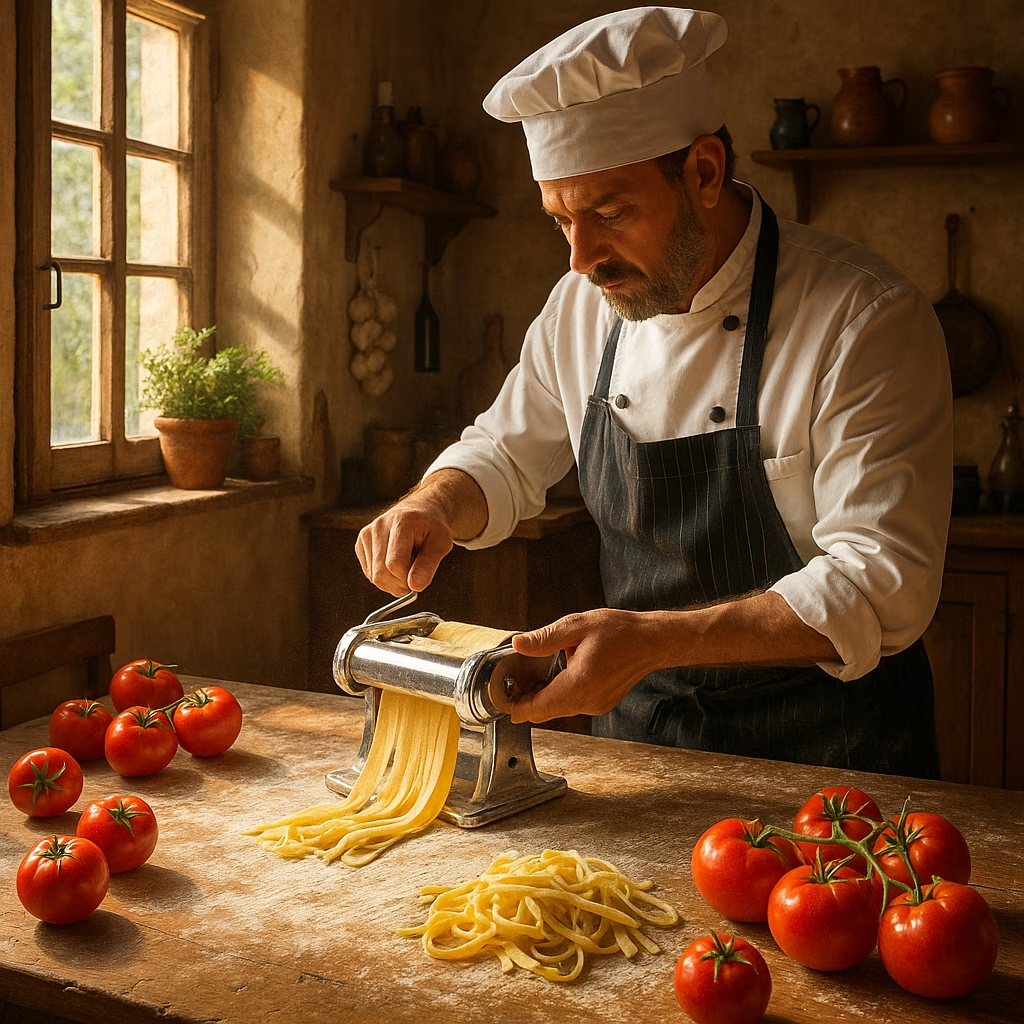
For years, I, like every other trained cook, clung to four sacred reasons for the big-pot-of-boiling-water rule:
-
Thermal Mass: A large volume of water keeps its temperature better and returns to a boil faster after adding pasta, preventing mush.
-
Separation: A rolling boil agitates the pasta, keeping the pieces from sticking together.
-
Starch Dilution: A lot of water dilutes the starch released by the pasta, preventing a sticky mess.
-
Tradition: Because that’s how it’s always been done.
Armed with skepticism and a lot of pasta, I decided to test these claims one by one. The results were mind-blowing.
Myth #1: You Need a Huge Pot for Thermal Mass
I set up three pots: 6 quarts, 3 quarts, and a measly 1.5 quarts. I brought each to a boil, added the same amount of pasta, and timed the return to a boil. The difference? Mere seconds. In fact, the 3-quart pot sometimes came back faster than the 6-quart one! Why? While the smaller pot's temperature drops more initially, it takes the same amount of energy to heat it back up. Since your burner outputs energy at a fixed rate, the comeback time is virtually identical. The larger surface area of a big pot can even cause it to lose heat faster. I tasted all three batches side-by-side. They were indistinguishable. Perfectly al dente, with the same firm core and cooked exterior. I even weighed them—each absorbed exactly the same amount of water (about 75% of its dry weight). So much for thermal mass.
Myth #2: A Rolling Boil Prevents Sticking
This one seems logical. The bubbling water moves the pasta around. But here’s the real secret: sticking only happens during the first minute or two of cooking. That’s when the starch granules on the pasta's surface burst and act like glue. Whether in a giant pot or a small one, if you don’t stir at the beginning, the pasta will stick. The solution is simple: give it a good stir during that critical first 90 seconds. After that initial stir, you can walk away. I cooked pasta in a tiny amount of water, stirred it once early on, and had zero sticking. The pot rinsed clean. The rolling boil itself is irrelevant; the stirring is what matters.
Myth #3: Starch Dilution is Crucial
This is where the plot thickens—literally. Starchy water isn’t the enemy; it’s the secret weapon. In restaurants, we cherish the cloudy, starchy water at the end of the night. Why? Starch is an incredible emulsifier. Adding a splash of that starchy water to your sauce—whether it’s a simple aglio e olio or a rich carbonara—helps create a creamy, cohesive sauce that clings beautifully to every noodle. Following this logic, I realized: you want starchy water! Cooking pasta in less water makes the cooking liquid more concentrated and potent for saucing.
I took it to the extreme. I cooked a batch with just enough water to barely cover the pasta. The result? Incredibly starchy liquid and perfectly cooked, non-sticky noodles. The fear of “too starchy” is pure poppycock. Embrace the starch!
The Ultimate Test: Does the Water Even Need to Boil?
Having debunked the first three myths, I asked the final, heretical question. Starch begins to gelatinize and absorb water at around 180°F (82°C). Boiling is 212°F (100°C). So... do we need the boil at all?
I tried it. I brought a small pot of water to a boil, added the pasta, let it return to a simmer, gave it one stir, put the lid on, and turned off the burner completely. I let it sit, covered, for the full cooking time. I was skeptical. Could this really work?
Not only did it work, it was a revelation. The pasta cooked perfectly in the residual heat, staying well above 180°F. The kitchen stayed cool. I saved energy and time. The noodles were flawless. My mind was officially blown. 😲
So, What’s the New, Better Method?
Here’s my streamlined, energy-efficient, foolproof pasta method for 2026:
-
Use less water. Just enough to cover the pasta by about an inch is plenty.
-
Bring it to a boil, add your pasta and a generous amount of salt (for flavor, not boiling point voodoo).
-
Stir well during the first 90 seconds to prevent initial sticking.
-
Optional but revolutionary: Once it returns to a simmer, put a lid on it and turn off the heat. Let it sit, covered, for the package's recommended cooking time.
-
Reserve that precious, starchy cooking water before draining.
-
Sauce immediately in a separate pan, using the starchy water to adjust consistency and create a silky, emulsified sauce.
A Few Important Caveats & Pro-Tips
-
Don’t use this method for fresh egg pasta. It’s too delicate and absorptive; it needs the constant high heat of boiling water to set properly.
-
It’s tricky with very long shapes like spaghetti. They need to soften to bend into a small pot. Solution? Snap them in half first. It’s not a crime, I promise.
-
Never add oil to the water. It’s a waste and prevents sauce from adhering later.
-
For ultimate speed, heat half the water in the pot and half in an electric kettle. Combine for instant boiled water.
As for Reason #4, tradition? Well, my grandma was Japanese, so her spaghetti techniques were... creative. The point is, we can honor tradition while also embracing better, smarter methods. Thanks to my wife’s innocent question, I’ve saved time, energy, and made better-sauced pasta. My doorman got a lot of noodles for lunch during my tests, but it was for a worthy cause. The next time you make pasta, ditch the giant pot. Your stove, your wallet, and your taste buds will thank you. Now, if you'll excuse me, I have some perfectly al dente, sauced-to-perfection pasta to eat. 🍝