XO Mazemen: Broth-Less Ramen for Hot Summer Days
Broth-less ramen has moved from niche curiosity to mainstream comfort, and by 2026 it remains one of the most practical styles for warm-weather cooking. Among the many variations, mazemen—often called mazesoba—stands out as a bowl that delivers the slippery, springy pleasure of ramen without the burden of a steaming pot of broth. The style gained wider attention through restaurants such as Shigetoshi “Jack” Nakamura’s Niche in New York City, which served mixed-noodle bowls alongside the broth-based ramen at his other restaurant, Nakamura. Yet mazemen is not new. Yuji Ramen has produced refined versions for years, and the dish belongs to a longer lineage of soup-less noodles that includes abura soba, the original oil noodle invented at Chinchintei in Musashino, western Tokyo.
From Staff Meal to Summer Staple 🌞
Ramen lore holds that Chinchintei created broth-less ramen as a cost-effective staff meal, since broth is the most expensive element of a bowl. The restaurant later offered it to customers as an affordable menu option, appealing to thrifty students from a nearby university. Chinchintei’s abura soba carries the hallmarks of classic shoyu ramen—noodles, chashu, nori, and menma—but no soup. Instead, tare and a generous amount of fat sit at the bottom of the bowl, and the diner mixes everything before eating.
The line between abura soba and mazemen is fine. Some insist that abura soba permits no broth at all, while mazemen allows a little. Others focus on names: abura soba should be quite oily, and mazemen should require mixing. That last explanation is somewhat absurd, since even original abura soba needs a little mixing. A third soup-less dish, hiyashi chuka, is a cold ramen salad popular in summer. It requires mixing and little oil, but it is neither mazemen nor abura soba; its chilled noodles and highly acidic dressing make it its own thing. These distinctions are more a matter of noodle geekery than practical cooking.
| Dish | Broth | Fat/Oil | Mixing | Typical Season |
|---|---|---|---|---|
| Abura soba | None | High | Yes | Year-round |
| Mazemen | Minimal to none | Moderate to high | Yes | Summer-friendly |
| Hiyashi chuka | None | Low | Yes | Summer |
Why XO Sauce Changes the Bowl 🍜
A tasty mazemen depends on a good tare, preferably one with deep dried-fish flavor, and a flavorful fat. The sauce that coats the noodles comes from these two elements. A few years ago, a test kitchen developed a recipe for XO sauce—the savory, jam-like condiment made from cured ham and dried seafood—and produced jars of it. Staff members began putting XO on everything, including noodle soups. One day, with ramen components on hand but no broth, a quick mazemen combining noodles, pork fat, tare, scallions, and a fair amount of XO came together. The result was remarkable.
Since then, many variations have relied heavily on XO as a flavor bomb. Without XO, a cook can still follow the method below using a flavorful tare and fat, but the dish will lack the same depth. It helps to think of mazemen as pasta: a well-sauced plate of pasta consists of noodles sheathed in a light slick of flavorful sauce. The best way to achieve that effect is to create an emulsion.
The Emulsion Method ⏱️
The technique borrows from spaghetti con la colatura di alici. Start with a very large mixing bowl—larger than seems necessary—so the cooked noodles and sauce can be whipped forcefully around the bowl. This vigorous tossing allows the starch on the noodle exterior to mix thoroughly with the oil and liquid in the sauce.
For every serving of noodles, combine:
-
2 tablespoons XO sauce
-
2 tablespoons oil or other fat
-
1 tablespoon rice vinegar
-
1 tablespoon soy sauce
Stir briefly with chopsticks, then boil and drain the noodles. Add them to the bowl and immediately toss and stir vigorously. After about 30 seconds, the sauce should take on a creamy consistency. Transfer the noodles to a serving bowl and top with thinly sliced scallions. The dish is ready.
One caution: the recipe scales up to two portions, but going further affects the salinity of the final product. It is also easier to whip two portions of slippery ramen around the bowl than three or four. For a crowd, make the dish in two-portion batches, or prepare each portion separately and wipe out the mixing bowl between batches.
Noodles, Fats, and Toppings 🥚
Any ramen noodle works. Instant noodles from a Shin Ramyun packet are acceptable, though better-quality fresh ramen, such as Sun Noodle products, yields a better dish. Homemade ramen noodles are excellent, too. Even instant noodles produce a tasty XO mazemen.
Any oil or fat can be used. Pork fat is a favorite, but rendered chicken fat, schmaltz, olive oil, a mixture of sesame and canola oil, homemade chili oil, shallot oil, or even clarified butter will work. The dish can be eaten at any time of day—breakfast, lunch, dinner, or late at night. With XO on hand and homemade noodles ready, a bowl can be on the table three minutes after a pot of water comes to a boil.
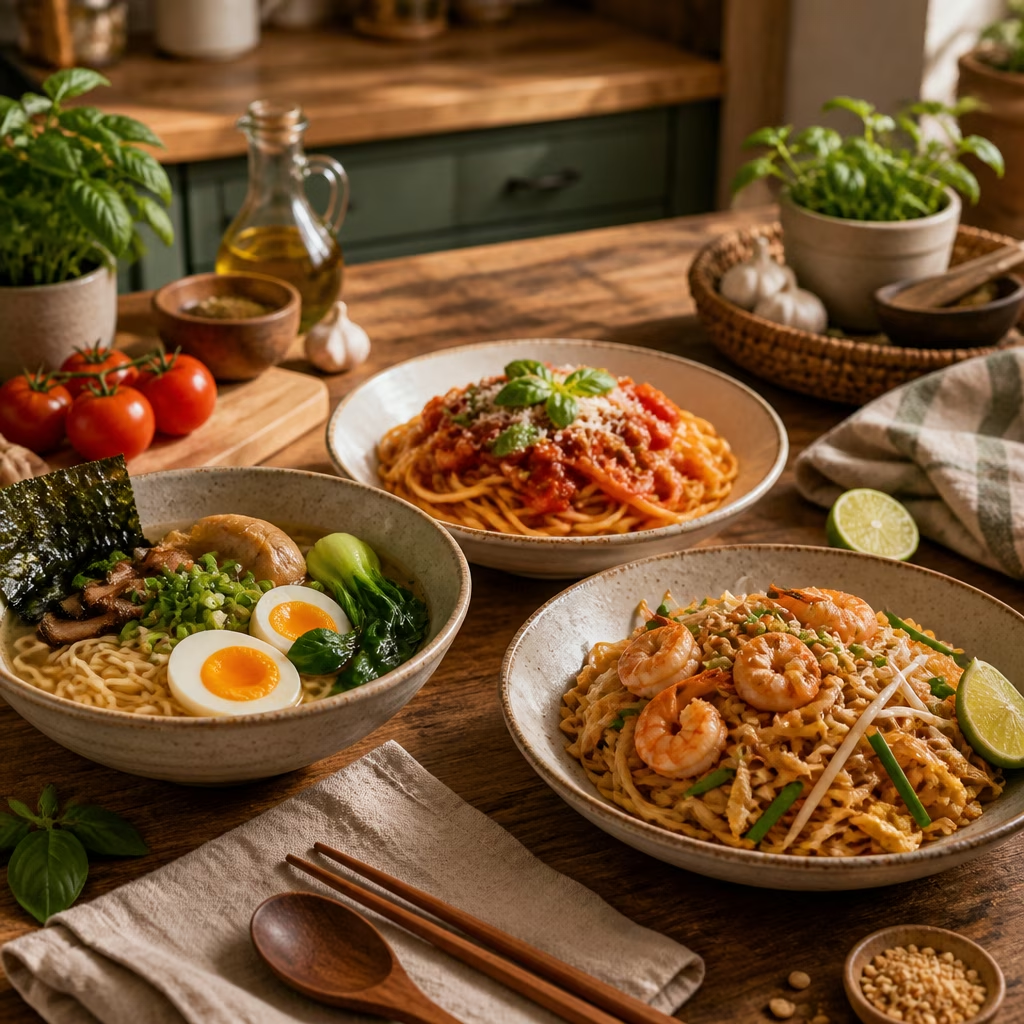
For a more substantial meal, add toppings. Blanched sugar snap peas and an onsen egg are excellent choices. A bit of greenery—blanched vegetables or sturdy salad greens such as chicory or kale—adds freshness. The onsen egg provides a luxurious topping, and the fattiness of the soft yolk tempers the aggressive salinity of the dish. If an onsen egg is not practical, a fried egg, a poached egg, or even a raw egg yolk can be used. The egg also obliges whoever digs in to mix the noodles, distributing the yolk and toppings evenly and pushing the dish firmly into the soup-less, mixed-noodle realm.
Not only is this dish perfect for summer, when long cooking is unappealing, but it also offers many pleasures of a nice bowl of ramen—slippery, springy noodles; a savory sauce; luscious fat; and a mixture of textures from toppings—in a fraction of the time and with hardly any effort. In 2026, as home cooks look for fast, flavorful, heat-free meals, XO mazemen remains a smart choice.