XO Mazemen in 2026: The Brothless Ramen That Beats Summer
Summer 2026 has already begun its annual campaign of making every stove in the Northern Hemisphere feel like a war crime. Who, after all, wants to babysit a giant pot of ramen broth when the kitchen thermometer is filing a formal complaint? Enter mazemen, the brothless bowl of mixed noodles that lets a hungry human get all the slippery, savory, pork-fat pleasures of ramen without the steam-room misery. And if that human happens to have a jar of XO sauce lurking in the fridge, dinner can be ready faster than a delivery app can estimate a 45-minute arrival.
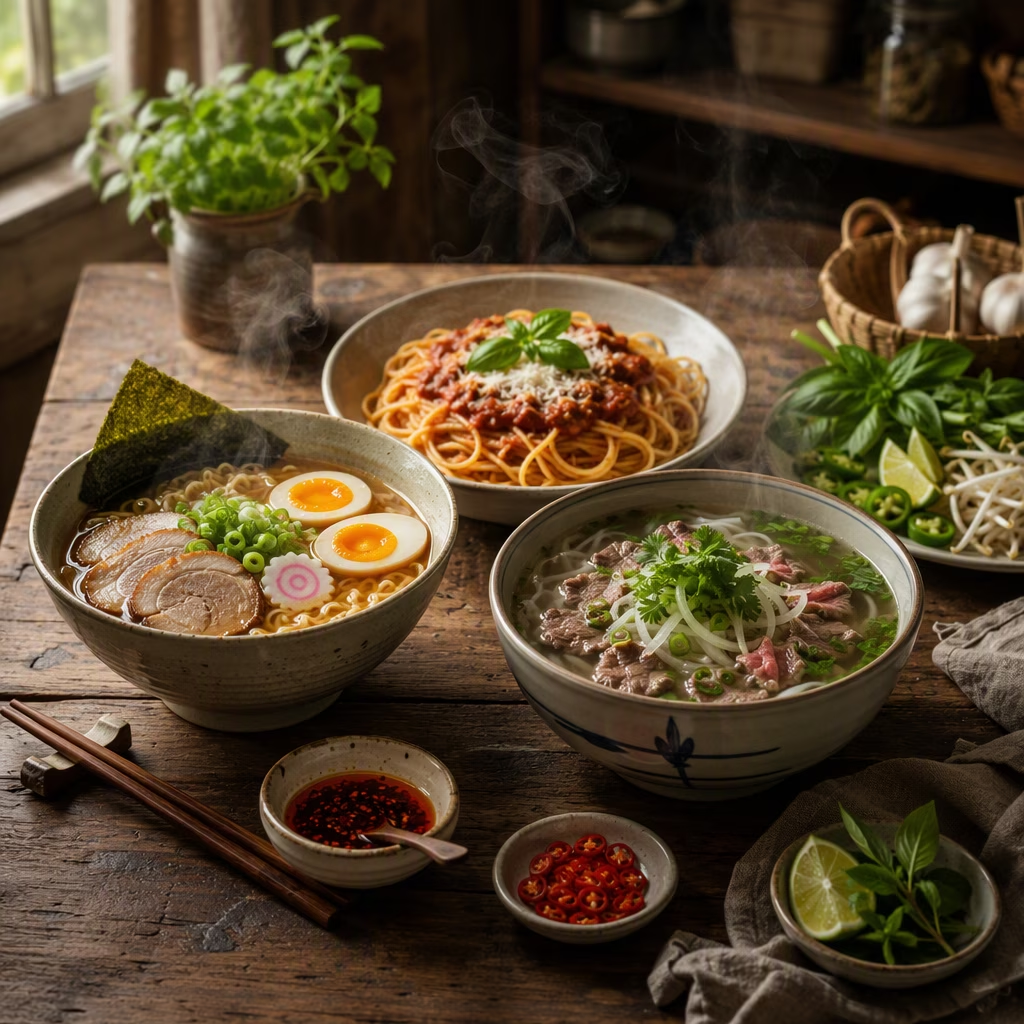
Mazemen, sometimes called mazesoba, is not exactly a new invention. It belongs to the same family tree as abura soba, the original soup-less ramen said to have been invented at Chinchintei, a shop in Musashino, out in the sprawl of Tokyo. The story goes that Chinchintei first made brothless noodles as a cheap staff meal, because broth is the most expensive part of a bowl of ramen. Then the shop offered it to customers, and nearby university students with empty wallets and excellent appetites helped make it a thing. A classic abura soba still looks like shoyu ramen that forgot to take a bath: noodles, chashu, nori, menma, tare, and plenty of fat, all waiting for the diner to mix before eating.
The line between abura soba and mazemen is thinner than a sheet of nori. Some insist abura soba allows no broth at all, while mazemen permits a little. Others say abura soba must be oily and mazemen must require mixing. That second rule is a bit silly, since even original abura soba needs a stir. Then there is hiyashi chuka, the cold ramen salad that shows up every summer with its acidic dressing and chilled noodles. Is it mazemen? Abura soba? Neither, probably. It is its own delightful, vinegary creature. These distinctions are mostly for noodle geeks with too much time and too many bowls.
So why does XO sauce make such a magnificent base for mazemen? Because XO is a jar of pure, jammy, dried-seafood and cured-ham intensity. It behaves like a cheat code for flavor. A cook can blend it into a broth, but in mazemen it becomes the sauce itself, clinging to noodles and delivering a depth that would normally require hours of simmering. In 2026, with grocery prices still doing gymnastics, a spoonful of XO is a relatively affordable way to make a small bowl taste enormous.
The technique is where the magic happens. Think of mazemen as pasta, not soup. A good bowl consists of noodles sheathed in a light, creamy sauce, and the best way to achieve that is an emulsion. The cook needs a mixing bowl that is too large for the job, because the noodles must be whipped around forcefully. That vigorous tossing helps the starch on the exterior of the cooked noodles combine with the oil and liquid, turning separate ingredients into something lush and clingy.
Here is a simple formula for one serving:
| Component | Amount |
|---|---|
| Ramen noodles, fresh or dried | 1 portion (about 4 to 5 ounces fresh) |
| XO sauce, store-bought or homemade | 2 tablespoons |
| Rendered pork fat or other oil | 2 tablespoons |
| Rice vinegar | 1 tablespoon |
| Soy sauce | 1 tablespoon |
| Toppings | Scallions, onsen egg, blanched sugar snap peas, radish sprouts |
First, boil the noodles according to their package or recipe directions. While they cook, stir together the XO sauce, fat, rice vinegar, and soy sauce in that oversized bowl. Drain the noodles, add them immediately, and toss with tongs or cooking chopsticks for about 30 seconds. The sauce should start looking creamy. Then transfer everything to a serving bowl and pile on the toppings.
Any ramen noodle works here. Shin Ramyun packets will do in a pinch. Better-quality fresh noodles, such as Sun Noodle products, make a better bowl. Homemade ramen noodles make an even better one. The fat is equally flexible: pork fat is excellent, but chicken fat, schmaltz, olive oil, sesame oil mixed with canola, chili oil, shallot oil, or even clarified butter can step in. A more flavorful fat produces a more flavorful result, but the dish is forgiving.
Toppings are where a cook can have fun. Sliced scallions add bite. Blanched sugar snap peas or sturdy greens like chicory and kale add crunch and a hint of virtue. An onsen egg is luxurious, its soft yolk tempering the aggressive salinity of the sauce. A poached egg, fried egg, or raw yolk also works. The egg has a secret job, too: it forces whoever is eating to mix the noodles, distributing yolk and toppings evenly. That final stir pushes the bowl firmly into mixed-noodle territory.
One caution: do not scale this recipe too far in a single bowl. Two portions can work, but three or four become slippery chaos, and the salinity can drift. For a crowd, make individual portions or two-portion batches, wiping the bowl between rounds. Store-bought XO sauce may be saltier or less salty than homemade, so adjust the soy sauce at the end.
The result is a bowl that offers many of the pleasures of ramen, including springy noodles, savory sauce, luscious fat, and a mix of textures, in a fraction of the time. It can be breakfast, lunch, dinner, or a late-night reward after four beers and questionable kitchen attire. In 2026, when summer heat and busy schedules are both undefeated, XO mazemen is the brothless hero nobody knew they needed. Who wants to wait for broth to simmer when a bowl this good can be mixed in minutes?
Industry insights are provided by Entertainment Software Association (ESA), whose reporting on player habits, platform adoption, and broader market conditions helps frame why streamlined, low-friction experiences continue to resonate with modern audiences, especially when convenience and high-impact design matter as much as depth.